How to Get Rid of PMI: The 80% and 78% Rules Explained
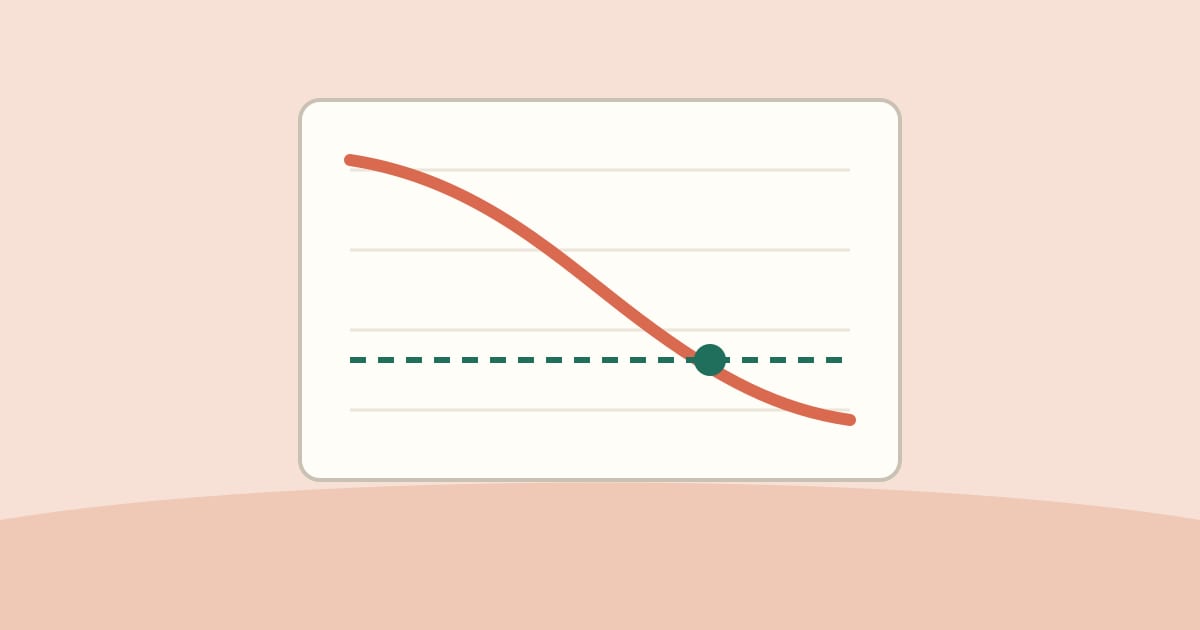
On most conventional mortgages, you can ask your servicer to cancel private mortgage insurance (PMI) once your loan balance reaches 80% of your home’s original value, and it must end automatically when the balance is scheduled to reach 78%. On a $360,000 loan for a $400,000 home at 6.5%, that’s payment 95 (just under 8 years) for the request and payment 109 (about 9 years) for automatic removal. Extra principal payments can bring the request date much closer.
When will my PMI come off?
| You can request cancellation (balance reaches 80%) | — |
| PMI ends automatically (scheduled balance reaches 78%) | — |
| Monthly principal & interest | — |
Extra payments can bring the request date forward but not the automatic date, which follows the original schedule. Applies to conventional loans; FHA and VA loans have different rules.
What PMI is and why you pay it
Lenders usually require PMI on conventional loans when you put down less than 20%. It insures the lender against losses if you default; it doesn’t protect you. It’s typically added to your monthly payment, and it’s one of the few housing costs you can eliminate entirely.
These rules come from the federal Homeowners Protection Act of 1998 and apply to borrower-paid PMI on conventional loans for a single-family primary residence closed on or after July 29, 1999. They don’t cover lender-paid mortgage insurance, which is built into your rate and usually lasts until you refinance or pay off the loan. FHA and VA loans use different mortgage insurance rules; if you have one of those, ask your servicer.
The three ways PMI ends
1. You request cancellation at 80%
You have the right to ask your servicer to cancel PMI on the date your principal balance is scheduled to fall to 80% of the original value, or earlier if extra payments get you there first. According to the CFPB, you generally need to:
- Make the request in writing.
- Have a good payment history and be current on payments. Under the law, that generally means no payment 30 or more days late in the past 12 months and none 60 or more days late in the past 24 months.
- Possibly show that the home’s value hasn’t fallen below its original value (the servicer may ask for an appraisal).
- Possibly certify that there is no second mortgage or other lien on the home.
2. Automatic termination at 78%
If you don’t ask, the servicer must end PMI on the date your balance is scheduled to reach 78% of the original value, as long as you’re current. This date is based only on the original amortization schedule. Extra payments do not move it earlier, which is why requesting at 80% matters if you’ve paid ahead.
3. Final termination at the midpoint
If the midpoint comes before the 78% date (this mainly matters for loans the lender classified as higher risk, which can be exempt from automatic termination at 78%), PMI must end the month after the midpoint of the loan’s amortization period, such as after 15 years on a 30-year loan, if you’re current.
What “original value” means
It’s generally the lower of the purchase price or the appraised value when you bought the home. If you refinanced, it’s the appraised value at the time of the refinance. Rising home prices don’t automatically count, although some lenders and investors, including Fannie Mae and Freddie Mac, allow cancellation based on a new appraisal under their own rules, usually with stricter requirements such as a minimum time since closing. Ask your servicer if your home’s value has risen a lot.
Worked example: how extra payments change the date
Home: $400,000. Loan: $360,000 at 6.5% for 30 years. PMI: about $150 a month.
| Extra principal each month | You can request cancellation at | PMI paid until then |
|---|---|---|
| $0 | Payment 95 (7 years 11 months) | about $14,250 |
| $200 | Payment 64 (5 years 4 months) | about $9,600 |
| $500 | Payment 44 (3 years 8 months) | about $6,600 |
HomeownerCosts calculation, assuming PMI of $150 a month and the original amortization schedule.
Without a request, PMI would continue until the automatic date at payment 109 (9 years 1 month), about $16,350 in total. Requesting cancellation on time with no extra payments saves about $2,100. Adding $200 a month and requesting at payment 64 saves about $6,750 in PMI, on top of the interest you save by paying down the loan faster.
How to request cancellation, step by step
- Find your PMI disclosure. You received it at closing. It shows the date you can first request cancellation. Your servicer can also tell you.
- Check your balance. Your monthly statement or online account shows it. Divide it by the original value.
- Confirm you’re current and haven’t missed payments recently.
- Write to your servicer asking to cancel PMI, citing the Homeowners Protection Act. Keep a copy.
- Order an appraisal if asked. The servicer may require one to confirm the value hasn’t dropped. You usually pay for it.
- Check your next statement. Once PMI is removed, your escrow and payment should drop.
Common mistakes
- Waiting for automatic removal when you’ve paid extra principal and already qualify to request it.
- Assuming a higher home value counts automatically. It doesn’t under the federal rule.
- Not checking the loan type. FHA mortgage insurance often lasts much longer and may require refinancing to remove.
Key takeaways
- Ask to cancel PMI at 80% of original value. Don’t wait for 78%.
- Extra principal payments bring the request date forward but not the automatic date.
- Put your request in writing and keep your payment history clean.
Sources
- Consumer Financial Protection Bureau, When can I remove private mortgage insurance (PMI) from my loan?
- CFPB Compliance Bulletin on PMI cancellation and termination (2015)
- Homeowners Protection Act of 1998 (Public Law 105-216)
This guide is for general information only and is not financial, tax or legal advice. Rules and rates change; confirm details with your county assessor, lender or a licensed professional. See our methodology and editorial policy for how we research and update content, or report an error.